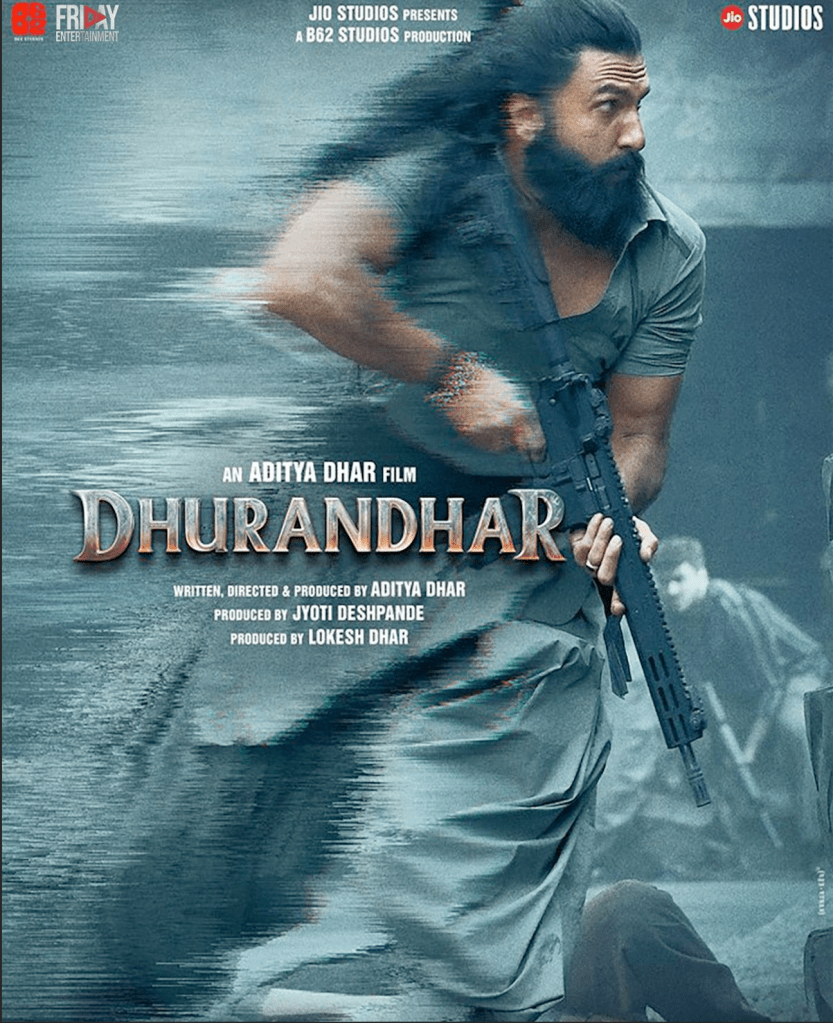
Dhurandhar

I rarely watch Hindi movies in theatre. I guess the last one I saw in theatre was Barfi.

But for Dhurandhar, almost everyone that I knew in my friends circle gave a thumbs up. So, after more than a decade, I saw a Hindi movie. And it was a mixed bag for me.

The opening scene in itself clearly conveyed that the movie is well made. After all these years of watching movies, I have developed a good sense of telling how the movie is going to be based on how it starts.

The good parts

The first half of the movie was just simply good. Such an amazing production quality. Some great performances. Even though the first half itself was pretty long (close to 2 hours), I totally enjoyed it. It was more of a 2-hour “drama” that takes us into the world of how terror is linked and unleashed.

Let’s talk about the production quality. Almost 95% of the movie happens in Pakistan. And wow, the way they recreated Pakistan (though we will never know if Pakistan actually exists the way they show) is simply amazing.

What was even more amazing for me was the way the movie elaborately went to the depths of showing the politics, underworld, intelligence and business communities operate. And how they are interlinked – like any other country in the world! There was some solid research, writing and production. The world building was top notch – showing rival gangs, politicians and businessmen having their agenda, how power is captured from ruling an important town and so on. It was an absolute delight to watch the first half spending so much time into this world.

With respect to the performances themselves, Akshay Khanna stands first. He simply pulled off a great performance with very little to say and so much expressed through eyes and facial expressions.

The same goes with Ranveer Singh too. There is little talking. And more through eyes and subtle smiles. Even when he talks, the words are measured. There is no over the top introduction scene for the hero – he just gets introduced just like that. He is also shown vulnerable in the movie. A hero getting molested? About to get raped? When have seen something like this in a mainstream cinema?

The way the real terror incidents were linked to the movie was also too good. The scene where the real audio between the 26/11 terrorists and their handlers was being played with a red background in the screen had a huge impact in terms of reminding everyone what was unleashed on that day. This is some superb film making where the lines between fiction and reality was blurred.

The parts that didn’t work for me

Let’s talk about the interval break first.

The entire stretch towards the interval was very well made. Ranveer is being shown the results of the work that he carried out. And through that lens, we also get to see the terror that gets unleashed during 26/11. There is a stunning performance from Ranveer and what must have been a very difficult performance for Akshay Khanna and Arjun Rampal to perform a scene where they need to enjoy the terror.

Right after this Arjun Rampal directly tells that they know there is a Spy. And we know that’s the interval moment.

I was totally hooked till this and came out telling my friends with whom I watched along that what a movie it is.

But then, what followed in the second half was a total let down for me.

What would have ideally worked is something like Arjun Rampal character finding out the handler (the owner of the tea shop where Ranveer works) and how Ranveer navigates the whole situation and so on. Instead the movie is fully dragged upon for next 1.5 hours or so.

The entire Sara Arjun character related scenes are such a drag in the whole movie. It looked as if that whole character had to be created for the video evidence of Sara Arjun father and Sanjay Dutt interaction.

The climax action sequence was also a super drag that goes for close to 10 minutes. By the end of it, I was kinda pleading for the Akshay Khanna character to even commit suicide. Add to that, the entire background score was so loud and sounded completely chaotic.

One of my other major challenge is apart from the impact the terror incidents create, there is very little emotional attachment to the movie. We hardly connect with the Ranveer character and root for his success as a spy.

The violence in the action scenes also looked like they were forced upon. I will definitely sound old when I say this, but I will still risk it – it appears that today you cannot have a blockbuster movie that doesn’t have scenes where brain comes out, hands chopped, bodies smashed, etc. I feel that violence is being normalized by all these filmmakers and it’s definitely not healthy.

Final Thoughts

While definitely not a bad movie, I felt Dhurandhar had so much potential that was not utilized well. The movie is easily 30 minutes longer and can have some better writing for the second half. May be the part 2 will have some answers for me.

What I got reminded as I walked out of the theatre was what a genius writer Kamal Hassan was.

Viswaroopam? Kuruthi Punal? Similar genre. I was way better satisfied with them than Dhurandhar.

Watching Nayagan Re-release

Note: I saw this in the third week of November 2025 and started writing this post the same day. However, work got very busy and I couldn’t complete it. But I was determined to finish it. So here I am, back in January 2026 to complete this.

Here we go.


And, yes it finally happened. Saw the OG “gangster” tamil movie in the big screen.

This year has been one of the best years for me with respect to movies.

A year where I got to see all of my favorite “gangster” movies in the big screen. First, it was “Pudhupettai”. Followed by the part 1 and part 2 of The Godfather. Ending with Nayagan last week.

Though I have re-visited various scenes of Nayagan many times, I have only seen the whole movie in one single sitting only a few times.

This time, obviously since the story is well known, watching it in the theatre provided a great experience of watching all the nuances the entire movie crew has put together. Those nuances that has made this movie as one of the greatest Tamil or I would even say Indian movie of all time. It was in Time magazine’s 2005 list of top 100 greatest movies of all time.

I personally noticed so many things in the movie and was smiling and discussing them with my friend during the movie. With no specific order, here are some things that stood out for me.

Neenga Nallavara Kettavara?

Are you a good person or a bad person?

This dialog is so popular that any Tamil speaking person would know the reference. But while watching this movie only I figured out the “origin” for Mani Ratnam to make this movie.

Mani Ratnam had spoken about how he had heard about this person called “Varadaraja Mudaliyar” when he studied in Bombay.

I guess it’s Mani’s intrinsic question of how come a person who is wanted by the police for so many crimes in the city, is also the most loved person by the people in Daravi?

Is this person a good person or a bad person? Nallavara, Kettavara?

Mani is so brilliant that he doesn’t try to answer this in the movie. He doesn’t put his view across. He has just laid out various parts of Velu Nayakkar’s life in this movie. And keeps questioning the audience “What do you think? Is he a good person or bad person?”

Think about this – Velu kills the rogue cop who has been torturing the people of Daravi only to be shown in the next scene that there is a mentally challenged kid who now doesn’t have an earning member to support him. So is Velu’s action justified?

Or let’s take this scene where Velu brings the goods stuck in the harbour to Reddy brothers surprise. The very ambulance that he bought for supporting the people of Daravi is being used to safely transport the smuggled goods.

To protect himself, his family and the fortune he has built, he decides (though difficult) to send his son to “take care” of the person who has turned approver, only to loose his son forever. His daughter very rightly says in the next scene that “I am going to Chennai. First you killed my mother. Now my brother. If I stay here I will also get killed”.

Through all these scenes Mani Ratnam very cleverly poses the question in the mind of the audience only to be explicitly asked by the grandson in the court.

I never understood the movie’s core like this until I watched it this time.

The Daughter

I was so blown away by the genius of Mani Ratnam in how the daughter character is written in the movie.

The character is so grounded in reality – the way how daughters will behave it real life. How women behave in real life.

At a very young age, after the death of the Saranya character, Kamal decides to send the kids to Chennai to keep the away from him. Without much of context, it’s the daughter, when the train just starts moving asks “Ungala la dhaan amma sethuttanga nnu solraangale. Unmaya appa?”. Mani clearly sets the stage for what’s going to come.

And then when the daughter is all grown up, she is the one who questions what right Kamal has to decide what’s right or wrong.

And she makes an emotional decision to marry a cop (very typical of how women would react in real life). And still keeps the name of her son as “Sakthivelu” to just have the memory of her past and not pass it down to the next generation.

Sheer brilliance in writing.

Mani also very cleverly creates the character of Nizhalgal Ravi. As a typical son who has seen his dad in younger days, he is attracted to the power and influence of being a “Nayakkar”. And solves issues for people when his dad cannot.

And also decides to step in to save his father when his father is sick.

Which brings me to the next brilliance in film making – an amazing staging, camera and music.

The “pan” shot that I love watching a million times

Just watch the below scene.

Kamal approves Nizhalgal Ravi’s plan and has kinda-sorta passed on the baton.

Nizhalgal Ravi is very happy. He eats the “paan” (beeda).

The camera is positioned behind Kamal and starts panning. It stops in the middle.

The son and dad are done with their conversation. Both are happy.

The camera pans further. The daughter appears.

Ilayaraja takes over and communicates what was not communicated by the daughter through any dialogue. The disappointment.

Watch from 1:47:24 to 1:48:17

Andhi Mazhai Megam

I always felt this song was there in the movie just because there had to be 5 songs in a movie. At least that’s how Tamil cinema was structured and watched in those days. In fact, I felt Mani just had kept 5 songs out of no option. Given a chance, he would have had no songs in the movie except may be “Thenpandi Cheemayilae” (which also seems to be an idea by Ilayaraja).

But this time, I was focusing on the lyrics of Andhi Mazhai Megam. And was blown away by the sheer quality of the lyrics. How deeply it conveyed the plight of lower class, their celebration and the class distinction in the society.

Just read through the below lyrics.

Neer nadakkum
Paadhai engum nanjaiyaanadhu

Naam nadakkum paadhai
Engum panjam ponadhu

Maadangal kalaikoodangal
Yaar seidhaar adhai naam seidhom

Naadaalum oru raajaangam
Yaar thandhaar adhai naam thandhom

Dhesam ennum solaiyil
Vergal naangalae

Thiyaagam ennum jodhiyil
Dheebam naangalae

Kamal’s Peak Performance

Of course, I don’t have to explain this in detail and everyone knows that Kamal peaked with Nayagan and pulled off the entire movie.

I kept smiling and getting goosebumps for everything that Kamal did in the movie.

Here’s one of my favorite.

Kamal sees his daughter who refuses to show her son to Kamal. Kamal is completely shattered by the whole sequence of events.

He is in his 60s. He comes out – check out the walking through the shot that shows his back. Kamal completely in the character and walking like how someone in their 60s would.

He exits the house. Turns to the right and see that’s not where the elevator is and then turns the left. (This could have got edited out or reshot. But they kept it because it felt real. Grounded.)

He presses the button to call for the elevator. And what he does next is just so grounded in real life.

His mind is completely with all those thoughts going on due to this interaction with his daughter.

The elevator doesn’t come immediately. He presses a few more times. And he starts walking down through the stairs.

This is exactly how we would do in real life.

And of course, a clever writing by Mani. Where Nasser comes out of the elevator and doesn’t see Kamal!!

Just this scene is enough to show the quality of the movie!

Watch from 2:08:04 (If you hit play, it should play right at that timestamp).

The “Aandava” and “Rudraksham”

In the climax sequence, Kamal finally sees his grandson and he is used to always giving something to people.

He searches for things in his hand and pocket and doesn’t have anything as he is coming from the jail.

He is devastated and just says “Aandava”. And by habit touches the “Rudraksham” he wears in his neck. Takes it away and gives it to his grandson. Literally god has intervened for this moment!!

What an absolute brilliance!

ps: I also had a goosebump for the sheer love of craftsmanship from Kamal and Mani Ratnam. This whole “Aandava” scene was written and performed by an actor and director who are fundamentally Atheist 🙂

Watch from 2:29:04

When I was in tears

The absolute last scene of the movie where “Thenpandi Cheemayilae” plays and the entire life of Velu Nayakkar is shown right from being a kid all the way till the end.

It also highlighted all the performances that Kamal pulled off in the movie. Probably Mani’s fan boy moment and doing a homage to Kamal.

But I couldn’t avoid thinking that Kamal is going to leave us one day. And literally all his performances that he has given us are going to play in our head. It’s going to be played on TVs and Youtube on that day. With probably “Thenpandi Cheemayilae” or “Vaanam thottu pona” (from Devar Magan) song being played.

I teared up in the theatre.

And I tear up now as I complete this.

Thank You Kamal.

Greed comes true

When I wrote the last post a month ago, I finished it saying I was greedy that I wanted to watch The Godfather Part II also in the theatre.

And this time around, the universe was kind enough.

Yes, The Godfather Part II got re-released last week and I grabbed the opportunity to see it on the big screen.

Even though many regard the first part very highly, it’s the part II that actually works more for me.

Because of one reason.

Rather one man – Al Pacino

It was so awesome to see his performance on the big screen. Especially the eyes – the way those magical eyes emote and can convey what’s going on in Michael’s mind without uttering a word. The mannerisms that he very consistently portrays at multiple times in the movie living Michael in and out. For example:

The way he uses two fingers and rubs both his eyes whenever he comes to a place after dealing with lot of “stuff”

Or the way he moves his left hand fingers when he is making important decisions (such as the below one when he is meeting Hyman Roth at his home in Miami)

Al Pacino also lived the character of Michael with so much consistency in terms how he reacts when people betray him. He is genuinely trying to make the family business legitimate, but when people within his family betray him or do not understand him, he simply shuts the door for them.

A great example is, how he literally shuts the door for Kate when she visits the kids without his knowledge. No words are uttered. Just a strong hatred in his eyes. Walks straight to the door and shuts it.

It’s the same with Fredo. When he discovers that Fredo plotted against him and his family, he simply shuts him off from his life – so much that he decides to kill his own brother. And that too, a brilliant scene where he gives a go ahead to his assistant to kill Fredo after their mother dies – again with just his eyes.

The Nayagan Connect

Of course, it’s inevitable that one cannot find how much inspiration that Kamal had taken from Al Pacino for Nayagan. If Al Pacino moves his left fingers, Kamal moves his right hand over his bald head. All those close up shots where the scenes were focused on Al Pacino’s reaction in his eyes – one could see how much Kamal and Maniratnam embodied it in Nayagan.

If there was a baptism scene in this movie where Michael kills his enemies, there is an equivalent scene in Nayagan where the Reddy family gets killed while Nayakkar performs the last rites for his wife.

Overall, I am super glad that my greed got answered.

And of course, there is no end to one’s greed. I am seeing news that Nayagan is likely to get released in theatres. And that will just complete it for me 🙂

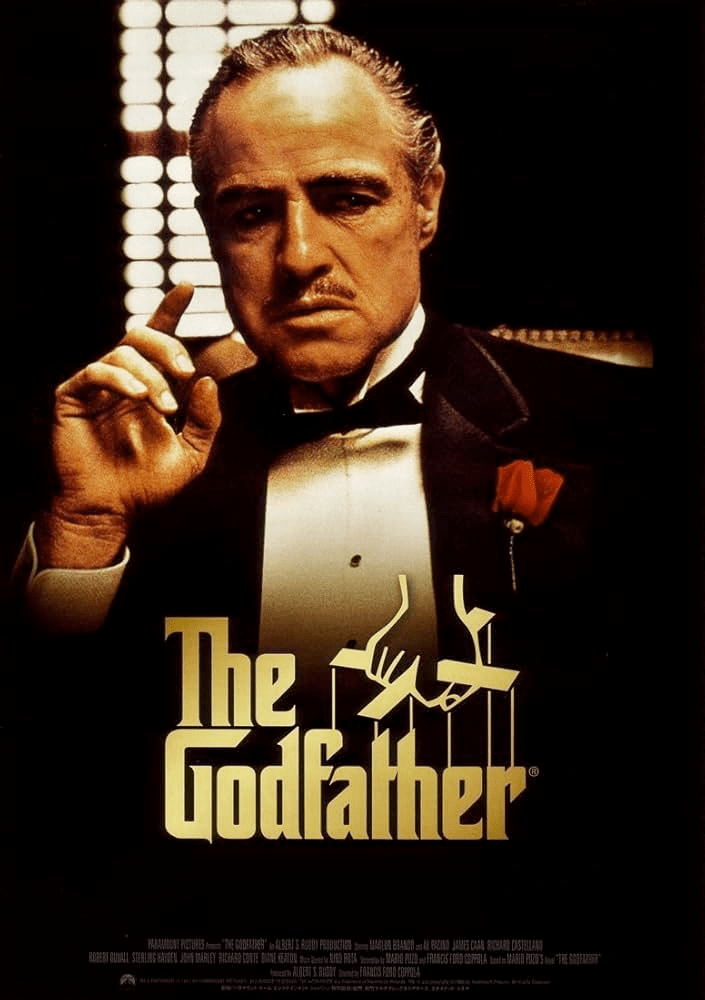
Watching The Godfather in the big screen

Never, ever, in my wildest dreams, I ever imagined that I would see this movie in the big screen.

I was casually checking last Wednesday if there are any good English movies to watch during the weekend and saw this being listed as a “Re-release”.

I saw it was running only in a few theatres across Chennai and just one show in a multiplex that I and my friend regularly watch any movie.

I didn’t bother to check with my friend and I just booked two tickets for the following Saturday. I knew very strongly that my friend would simply drop everything else for this lifetime opportunity.

And, it was a lifetime opportunity for us.

Watching one of the finest craft ever made. On the big screen. The way the director intended it to be seen.

Obviously I had seen this movie a number of times. This friend of mine recommended it back in 2007-2008 times.

In the 90s when I got exposed to Hollywood movies, I was just watching the regular sci-fi, action movies. The Speed, Independence Day, Cliff Hanger type of movies. Crime-Drama as a genre was something that obviously a school/college going kid doesn’t like to see. Especially the ones that goes in a slow pace.

So was my friend until he went to the US and accidentally stumbled upon this genre. He came back and highly recommended to see this.

I tried initially and couldn’t sit through the first 30 minutes – this was sometime in 2007/2008. I normally watch during the night and I dozed off in the first 30 minutes.

A couple of years passed and my friend pushed me to watch it again during the day – like an afternoon.

Sometime in 2010/2011 I saw the first part of “The Godfather” series and was completely blown away.

Ever since, I have come back to this movie at least once every 2 years to notice something new.

Though we now remember every single scene in the movie and of course most of the dialogues, it was still a different experience seeing it in the theatre.

The beauty of watching it in theatre (any good movie) is that you are locked in that dark room for 2-3 hours. And you are completely taken into the world the director has created.

It was the same in this case too. For 3 hours, I was totally in the world of the Corleone family. How the power was being transitioned and all the dynamics within the family and with the outsiders.

And I noticed another brilliant performance

Above is the scene where Al Pacino has come out of the bathroom having taken the gun that was hidden in the bathroom.

He is going to take out Solozzo in the next few minutes.

He comes back to the table and sits in the table. The camera zooms to Al Pacino’s face.

Solozzo continues to chat with Al Pacino.

Al Pacino is listening to what Solozzo is saying.

But he is also listening to something else.

The sound of an approaching train.

He waits for the train to make the crossing near the restaurant where they are dining.

And when the sound of the the crossing train is at the max, he shoots Solozzo.

A brilliant piece of scene staging by the director.

And an amazing performance by Al Pacino. He simply keeps his head titled (to show that he is forcing his ear to listen to the train sound) and he moves his eyes to express what’s going on in his mind.

You need to watch this scene to fully appreciate this.

The train sound is also played out to us in the background when Al Pacino comes out of the bathroom – thats when the character “Michael Corleone” had listen to the approaching train sound. And decided that another train must pass soon and will use that opportunity to make the kill.

I noticed this during the movie (thanks to my friend who pointed it out). Something that I had never noticed in so many times I had watched before.

I am truly grateful for this once in a lifetime opportunity of watching this masterpiece in theatre.

And now I am greedy – I want the part 2 to be re-release again. For me, personally, part 2 is still the best in the trilogy.

ps: Of course, I and my friend were discussing and comparing how Kamal and Mani had got inspired and used many techniques in Nayagan. Kamal’s hairstyle, the expression in the eyes, the calmness are all direct lift-off from Al Pacino.

And of course, the opening scene where “Bonasera” describes about the cruelty his daughter faced is a direct life-off and played by A.R.S (the DGP) in Nayagan 🙂

F1: The Movie

F1 movie poster

4 times. In theatres. Within a month and half.

This movie made me come back to the theatres like never before. I don’t think I have done this for any other movie.

The production quality of this movie is right at the top. It’s probably the best produced movie by Hollywood this year.

When I saw the trailer of the movie a few months ago, I had told my friend (and movie buddy) that this one is a theatre watch and we had to watch it in IMAX. But what I didn’t realize back then was that I would end up watching it a number of times in the theatre itself.

Title Card

As they Tamil saying goes “Oru paanai sothukku oru soru padam” (You may know by a handful the whole) – when I saw the title card it clearly conveyed what you can expect from the rest of 2+ hours of movie. A complete high quality production that’s truly authentic and feels absolutely as real as possible.

Here’s the title card scene:

It’s very likely that this movie will win an Oscar for Cinematography.

Let’s just look at the shot that shows the circuit. A drone shot that shows the circuit from far off. And the drone slowly moves closer to the circuit. And you don’t see the car until very late. You start hearing the sound of the car doing laps. And suddenly the car appears.

And we all know how fast F1 cars are. During the shot the car was probably doing 180-200 mph.

As the car appears out of nowhere all of a sudden, the drone shot seamlessly transitions to a high speed shot where the camera is seamlessly tracking the speed at which the car is going.

I don’t know how they got this idea and executed it – it’s probably a combination of multiple shots and some brilliant editing. But as an audience I simply felt wow at this moment itself.

Timestamp 1:29 in the video – the pan shot. This was so amazing to watch in the big screen. How the camera seamlessly pans from the front view to the rear view. This pan shot was used a few times in the whole movie and it used to appear all of a sudden during tense moments in the race showing both the driver’s perspective (front) and the driver’s reaction (focusing in the face of Brad Pitt).

What blew my mind about the cinematography was this – you obviously have to shoot the film in 4K and for IMAX which requires pretty heavy camera rigs. And an F1 car is the complete opposite of “heavy”. There is no way you could mount heavy camera rigs to shoot all those perspectives from the car. And it clearly showed that they had mounted cameras on the car to give us those perspectives.

Here’s behind the scenes video where the team talks about developing custom cameras in collaboration with Sony to bring out those awesome shots.

The Score

What an amazing score by Hans Zimmer!! The main theme that was played in the Title Card is so captivating. This main theme is played again after the end credits roll – you need to wait out for about 2-3 minutes for the theme to play again. Every time I saw this movie, I made sure I stayed for the end credits and heard the theme once again in the theatre’s sound system.

It’s kind of dangerous to play this theme in your car while you are driving – you literally feel like Sonny Hayes and might start racing on the road 🙂

Similarly the score during the final lap where Sonny Hayes feels “flying”, the score that comes right after he wins the race and the team starts celebrating took the movie to a different level.

To me, Interstellar is the best work of Hans Zimmer. This comes next.

Real IMAX Experience

When I saw the movie in IMAX in Chennai, I wished if I had the chance to see it in IMAX in the US. The IMAX that we have in India (except the Prasad labs one in Hyderabad) all have screens that have rectangular aspect ratio. This is very different from the proper IMAX theatres where the screen is more square-ish and seating arrangements are different with more vertical seats (where your knees are literally right above the head of the person sitting in front of you).

Those proper IMAX theatres are built for IMAX from the grounds up and they give a much better experience.

Every time I come to the US, the first thing that I look for is if there is a proper IMAX theatre nearby and if some great movie is being played (my unfulfilled wish so far is watching Interstellar in a 70mm film proper IMAX).

As luck would have had it, I was in the US last week and had some time over the weekend. And I saw F1 was being played at a proper IMAX near to my cousin’s place where I was staying.

I and my nephew went to watch it in IMAX. My nephew is about 17 years old, he had seen already once and wanted to see it once more in IMAX – such is the impact this movie has had on people 🙂

When compared to the IMAX we have in India, the screen didn’t make much of a difference. But the sound quality was definitely a few notches up. We managed to get seats in the absolute center of the theatre to get the perfect sound experience. The main difference is the clarity of the sound where you are able to hear even the slightest of the sounds. It totally was worth it!!

What about the movie? The plot?

It’s a standard commercial movie plot. You literally know how the movie is going to end – that Sonny Hayes will win the race. It was also a giant commercial for Apple products (white themed interiors and suits, visibly placed Apple Mac Studio, Apple Monitors and what not) and Expensify, T-mobile, etc…

But despite that, it’s a movie that will make you watch it a few times – for the sheer production quality. How real it felt on screen is something that can be experienced only in theatres.

A month and half later, as I walked into a theatre in Chennai yesterday, the movie is still being played and people are still watching it.

If the movie is still running in a theatre near you and you haven’t watched it yet – go and watch it. An IMAX preferably. You will absolutely be blown away!

ps: I haven’t been following F1 since 2004. 7-8 seconds pit stops were considered perfection back then. I couldn’t believe that they have got it down to 2.5 seconds these days. While reading out pit stops, found this amazing video that explains the precision and engineering behind those 2.5 seconds pit stops – in slow motion. Do give it a watch if you are interested!

SPB | The Laughs

For all of my previous posts, I was able to start writing in the get go. But somehow I have been sitting on this post for more than two days without even writing a single word. I kept thinking “How do I start this post?”, “Where does one start when they have to write about SPB?”.

And I was wondering why it is so difficult. Why don’t I just start writing what I feel?

Only then I realized SPB was that. He is a feeling. He is an emotion. While we can express most of our feelings in words, some feelings cannot be described in words. And SPB is that. And that’s why millions of people just mourn this loss within themselves; in silence.

In part, the reason why SPB is an emotion to us is because he emoted so well in his songs. He would sing “Adae nanba unnai velvaen” in Vetri Nitchayam with so much power that we felt Annamalai’s pain within ourselves. And when he sings “Kannirendil naan dhaan Kaadhalenum Kottai, Katti vaithu paarthaen athanaiyum ottai” in “Unna Nenachae” (Aboorva Sagotharargal), we cried along with Appu (for his and our love failures!).

While Kamal Haasan emoted so well on screen, I would argue that SPB was emoting equally through his songs – just that the medium is different.

Any careful listener of SPB’s songs would appreciate the variety of emotions that he brings to his songs. And he would do those so effortlessly without messing up with the ragam, the words and its meanings.

But I was surprised at the variety that he brings to just one emotion – laughter. Instead of me trying to describe it in words, it’s best you listen and understand what I mean. Here’s a small compilation of the different types of “laughs” that SPB has performed in his songs. In some cases, you may miss it if you aren’t listening careful enough – so I have called out right at the moment he emotes. And you will also see (or rather listen :)) SPB performing 5 different variety of laughs in a single song.

Without any further due, here you go. I would recommend you use a headphones. Otherwise you may miss those magical touches.

And that’s why SPB is an emotion to us!!! I somehow don’t feel that SPB has passed away. For, an emotion dies only when the person who feels it dies. So, until I die, you will always live within me sir!

Aan Paavam | Contrasting use of background score

Aan Paavam is one of my all time favorite movies. It’s one of the greatest entertaining film with a very simple narrative. This is the debut for Pandiarajan as an actor and I didn’t realize for a very long time that he was the director too (his second film after Kanni Rasi).

Apart from the many comic scenes (brilliant Janakaraj, VK Ramaswamy and Kollangudi Karuppayee ) for which I keep going back to this movie, there is yet another main reason. Yes, the background score of Ilayaraja for this movie.

While this movie is appreciated for all the entertainment it provides, Ilayaraja provided a great background score for this movie (and of course the famous Kaadhal Kasukkudhayya song).

Here’s the specific score that has stayed with me ever since I heard it for the first time when I was around 15/16 years (when I saw the movie for the first time).

The Situation

Pandiyan and Seetha like each other as part of the “Pon Paakum episode“. However, the broker says Pandiyan is not the “Mapillai” he had recommended to Seetha’s father and there is a mix up. Despite Pandiyan’s attempt to meet Seetha and convince her, Seetha says she will marry only the person her parents choose. Pandiyan gives an ultimatum – “I will wait at the riverside tomorrow morning. If you don’t come to meet me, I will not bother you anymore”

Overnight Seetha’s parents talk that they also like Pandiyan and Seetha’s father will meet Pandiyan’s father next day to proceed with the wedding.

The next 5 minutes or so is an absolute masterpiece to watch. Its a great screenplay and Ilayaraja elevates it to a different level altogether.

I have broken it down into 4 parts. And these 4 parts have distinct emotions to it. Ilayaraja uses just two compositions for these 4 parts. The best part is, both the compositions are used in a contrasting way to convey exactly opposite emotions.

Part 1 – The feeling of love

After Seetha’s parents agree to talk to Pandiyan’s parents, Seetha fondly recollects the encounters with Pandiyan. Her love for Pandiyan is expressed through simple shots. She is enjoying the night anticipating her meetig with Pandiyan the next day at the riverside. She even has a “Marudhani” in her feet 🙂

Ilayaraja brings out a brilliant composition with just a flute, a bass guitar and a beat. Here you go:

Part 2 – The Joyous Passage of Time

The scene transitions into a joyous passage of time. The overnight wait and Seetha happily getting ready in the morning.

A “Veena” is all that Ilayaraja needed to compose a score for this:

Part 3 – The Painful Wait

Just as Seetha was about to step out of her house to go to the riverside, her mother forces Seetha to help her out. Seetha is frustrated. Pandiyan has arrived at the riverside.

Ilayarja uses the same composition that he used for the previous scene. With just one addition – the sound of a clock ticking. And it just works well for the painful wait that Seetha and Pandiyan are going through.

Part 4 – The Final Joy and Sorrow

Seetha finally gets relieved. She is running like crazy so that she meets Pandiyan on time. Just as Seetha arrives at the spot, Pandiyan is walking away in the distance.

As Seetha finds out Pandiyan walking away, Ilayaraja uses the same composition that was used in Part 1 to convey the sadness.

In Part 1, the composition was made up of flute and it conveyed the love and the happiness that Seetha felt (anticipating her meeting the next day). In Part 4, the same composition is now made up of voilins and it conveys the sadness and the sorrow of the situation.

Bonus: The Magical Timing

If you didn’t notice in the above clip, just watch again at 0:30 seconds. That’s when the audience is revealed that Pandiyan has actually left. The camera pans from right to left. The score exactly changes at that moment of camera panning from right to left 🙂

Ilayaraja would have composed the entire score in one go. Would have recorded it continously. No computers to edit the timing through software.

Here’s the entire clip in full. Watch it in its full glory to feel the magic again. 3 minutes of absolute bliss.

Lessons from Ilayaraja’s Singapore Concert

If you haven’t checked out yet, I highly recommend the following playlist

This was a concert conducted by Ilayaraja in Singapore in 2018. The quality of the show is simply awesome and the post production quality to bring it to youtube is even more awesome for people like me who missed watching this live.

I have now seen the videos in this playlist many number of times. Beyond the awesome performance, there were quite a few important life lessons that I learnt.

Always give your best

This was a show that badly needed S.P.B. But unfortunately Ilayaraja and SPB hadn’t made truce yet (I am glad they ironed their differences in 2019) and Mano was singing all S.P.B songs. Of course, every single person who listened to the songs live that day and on YouTube would compare the performance with S.P.B. Not just this performance, any peformance where Mano had sung a S.P.B song would attract comments like “Not even 10% of S.P.B”.

But that didn’t stop Mano from giving his best. Just listen to this portion of “Pani Vizhum Malar Vanam”. Mano perfectly imitates S.P.B’s laugh and Ilayaraja was completely surprised (his reaction and the laugh that follows is simply awesome)

I am sure Mano always knew that he would be compared with S.P.B. But that didn’t stop him from giving his best. And your Guru is surprised that you are performing to perfection – what else is required?

Staying Humble and Having Fun

Mano again. Take a look at the following and you will understand what I mean. Mano has sung well over 30,000 songs (some 2000 songs for Ilayaraja alone). Yet, he stays humble and has some fun too!! He brought an instant smile and laughter amongst Ilayaraja, other singers on stage, the audience and the foreign orchestrator!!!

Take a bow Mano!! I still like the S.P.B version of these songs any day 🙂 But as a human being you are simply awesome!!!

Perfection is always appreciated

Chinna Chinna Vanna Kuyil – the song from Mouna Ragam. This song was recorded 30 years ago!!! But there is a specific point where Chitra finishes and couple of small beats play to perfection. Ilayaraja signals and has a small smile on his face that it all synchronized well. Take a look:

The greatest entertainer is the Music

Spend next 7 minutes of your life listening to the following. It is very likely that you will play this multiple times and spend more than 7 minutes. There was just so many happening in this performance:

  • Right from the beginning, everyone who is singing is absolutely happy to sing this song
  • There are multiple places in this song where the drums catch a specific nerve amongst the audience that you instantly start dancing
  • The drummer plays with a superb perfection that audience ask for once more (where Ilayaraja makes fun of Mano :)) and the drummer again performs to perfection!!
  • The song is simply timeless. The song was recorded 33 years ago!!! It’s no wonder all the middle aged people were so happy to listen to this song. But just look at the numbe of 20 something people who thoroughly enjoyed this song. It makes even a 5 year old go crazy!!!
  • And what a finish – I am guessing this was the last song of the concert. Everyone who had turned up that day would have left so happy!!! I wish I experienced it live

Without any further due, here are those 7 minutes of happiniess to you

How To Name It?

I have an Ilayaraja specific bucket list. Starting to write blogs about his music was one. There are few more:

  1. A monumental wish of digitally re-recording his popular creations (both songs and BGM so that all of us can appreciate the true depth in his compositions)
  2. Being in his studio and watching a composition come alive
  3. Time-travel to 80s and do point 2. Stay put in his studio and never bother to do anything else

But one of the things that I had been longing for and couldn’t somehow do it so far – watch one of his concerts live. Because I am quite aware that being in his studio is a far fetched wish – watching at least a full orchestra performance is pragmatic. And that wish came true. Yes, I managed to visit the temple and get a proper darshan – at the Isai Celebrates Isai event that was organized (pretty poorly; more on that later) to celebrate his 76th birthday and raise funds for the “Cine Musicians Association”.

The orchestra

Hearing the orchestration of a song live is a completely “elevating” experience that cannot be expressed in words. The perfection with which every person of the orchestra plays to bring the composition is something that needs to be experienced in person. It’s not just the instruments, even the singers sing to the notes that’s been handed over to them (of course singers like SPB would add their touch in between). The best example of the perfection was this – one of the songs was halted in between when Ilayaraja got upset with a security guard who apparently came to the stage and disturbed the proceedings (it sounded pretty silly on Ilarayaja to me). Ilayaraja said “stop, stop” and everyone stopped playing. It got stopped at the middle of the second interlude of the song. After all the commotion got over, Ilayaraja asked to resume. That’s when I realized the magic – the entire orchestra just continued from where they paused. It was as if you hit the pause button of your music player and resume a while later.

I had a mixed feeling at that moment. I was completely floored – amazing set of professionals (both the Hungarian/Indian musicians and the singers). And I felt “nothing” as a professional. That I never had aimed for the level of perfection that these people exhibited. Exhibited live. L.I.V.E. In front of 1000s of fans. As a Software Engineer, we fret doing live demos. Like simple “Hello World” demos. We even keep a recording of the demo as a backup.

S.P.B

When I started writing this post, I wanted to keep the SPB section towards the end – like eating your favorite dish at the end. But what lingers in my memory now about the show is S.P.B. Or rather the deadly S.P.B and Ilayaraja combination. This show got S.P.B and Ilayaraja together again – after all the drama between them on the “copyright” part (watch Rajini’s way of making fun of it here). And what a difference S.P.B makes to Ilayaraja’s compositions was right on display during the show. And here’s the breakdown:

Madai Thirandhu

The first song that S.P.B sang was the infamous Madai Thirandhu. I realized the magic of S.P.B when he sang the “Pa…Pa…Pa…PaPa” portion (listen to the original here) just after the first interlude. The first interlude itself is an amazing composition with so much of voilins, guitar and keyboard. And then S.P.B does so much modulation of his voice during the “Pa…Pa…” portion. He did that portion exactly (in fact I would even say better than the original recording) during the show. I was blown away on how at this age, he could do those modulations. And I was like “Man…we are on for a S.P.B magic tonight…”

There were couple of important emotional moments. Specifically when he sang these lines:

“காலம் கனிந்தது கதவுகள் திறந்தது
ஞானம் விளைந்தது நல்லிசை பிறந்தது

புது ராகம் படைப்பதாலே நானும் இறைவனே
விரலிலும் குரலிலும் ஸ்வரங்களின் நாட்டியம்
அமைத்தேன் நான்”

And

“வருங்காலம் வசந்த காலம் நாளும் மங்கலம்
இசைகென இசைகின்ற ரசிகர்கள் ராஜ்ஜியம்
எனக்கே தான்”

Definitely “காலம் கனிந்தது” for S.P.B and Ilayaraja to be back together. The lines “விரலிலும் குரலிலும் ஸ்வரங்களின் நாட்டியம்” and “இசைகென இசைகின்ற ரசிகர்கள் ராஜ்ஜியம்” are very apt for the duo. Apparently the lyrics was originally written by Manivannan (http://www.envazhi.com/manivannan-a-lyricist-too/). If so, what a “dheega dharisi” he was!!

Nilavae Vaa

This was his next one. To be honest, this didn’t create much of an impact. May be because we have listened to this song a million times and take it for granted.

Oh Butterfly!!

When S.P.B finished singing this one, I had tears in my eyes and was speechless for few moments. I think it was one of the “Oliyum Oliyum” where I heard this song first and I was may be 10-12 years back then. This song has this character of making one to be at peace the moment they listen to it. Just like one watching a Butterfly!! And if you listen closely, the second interlude really has music arranged like a Butterfly flying (watch Ilayaraja explain it here: https://youtu.be/O4s9Vbs0McU?t=56).

The magic that S.P.B performed live were these:

  • Listen to the start of the song (https://www.youtube.com/watch?v=ny2zQpgvWqA). He utters the word Butterfly 4 times. He starts with “Oh Butterfly! Butterfly!”. And then the third line goes “Wow! Wow!! Oh Butterfly! Butterfly!” The 3rd and 4th utterances of Butterfly has a distinct sootheness in it. He sang exactly like that on stage. Exactly!!! Some 35 years (37 to be exact) since the original was recorded
  • Immediately after that the song goes “அருகில் நீ வருவாயோ
    உனக்காக திறந்தேன் மனதின் கதவை”. He sings the “அ” in “அருகில்” from the bottom of his voice giving it the required emotion. And its sung in a high pitch. During the live performance, I would say that he even went a higher pitch than the original. And did that completely effortless. What a sight it was!!! No matter how hard I try, its very difficult to express it in words
  • S.P.B and Yesudhas sang together Kattu Kuyilu Manasukulla song from Thalapathy. It was so refreshing to hear the song come alive again on stage. It was pretty emotional as well as the lyrics itself is about the friendship between the main characters in the movie. But it looked as if the song was even apt for the friendship between S.P.B and Yesudhas. In fact Yesudhas even called out saying that S.P.B is more like a younger brother even though they weren’t born to the same mother. The specific line “பாசம் வெக்க நேசம் வெக்க தோழன் உண்டு வாழவெக்க
    அவனைத்தவிர உறவுக்காரன் யாரும் இங்கில்லே” was pretty emotional – in fact that portion was sung by Yesudhas and S.P.B gave a hug to Yesudhas

My respect for S.P.B has gone up manyfolds after this live show. I am now listening more carefully to all of his songs to enjoy the magical touch that be brings to the genius composition from Ilayaraja. Though Ilayaraja has certain pride about himself (which I feel has become intolerable for me), he should be thankful to almighty that he had someone like S.P.B all along with him to bring all those compositions the life it deserves.

K.J.Yesudhas

After the show I read more about Yesudhas’ career. Apparently he has sung more than 80,000 songs in a career spanning 40 years. Thats about 5 songs a day. And he slowed down towards the end of his career. I think we take Yesudhas for granted that we don’t even realize the scale of his contribution to music. There can only be one version of Harivarasanam. So much devotion by him in every song that he sang. So much that even “Maasi Maasam” sounds more divine than sensual 🙂

Unlike S.P.B, age shows up in Yesudhas’ voice. But the divinity hasn’t gone down even a bit. In fact, after he sung few songs, he was narrating incidents about the friendship with S.P.B and spoke great about the collaboration between Ilayaraja and S.P.B. He then concluded with some sloka. The whole episode felt as if some divine power came down to earth and blessed two souls.

The other side of the show

While I was happy to witness all of the above, there was tremendous frustration with the way the show was organized. The number of issues that happened that day will make me think a thousand times before I go to any other live show in the future.

  1. Seating Issues: For the start, there was complete chaos with respect to the seating arrangement. I had got a Rs.2000 ticket. However, the event layout allowed even folks who had got 500/1000Rs ticket to be seated in the same zone. By the time (a good 1.5 hours ahead of schedule on a hot sunday evening) we reached our zone, all the good seats in the 2000Rs zone were already taken by folks who had bought 500/1000Rs ticket. Despite a few of us fighting against this, the organizers did not bother. And the police personnel as well. I wouldn’t blame the police folks. And wouldn’t blame people as well (there were no signages or volunteers to guide). It was a terrible mis-management by the organizers. And they simply didn’t want to fix it. They were just happy to take the money that day
  2. Delayed Start: While the about seating issue was going on, the start of the show kept getting delayed. There was some lady who was supposed to be an anchor for the show and she couldn’t stand for 5 minutes on stage and keep the people’s mood going. She disappeared in the next minute. Singer Mano came and apologised and cited traffic as a reason for the singers to get delayed. As audience we were instructed by the booking portal to plan for traffic. Why can’t the singers do the same? It’s the people who pay money for the show who should plan ahead and wait for hours together in the scorching sun. By the time the show started it was delayed by 1h45mins
  3. Terrible Nadhaswaram Filler: It appears that Ilayaraja loves Nadhaswaram and they had organized a troupe of 75 Nadhaswaram artists to start the show. As the singers were getting delayed, the Nadhswaram artists were used as a filler. The overall performance of the troupe was some 10 notch below the Nadhaswaram and Thavil one would arrange for a wedding. It was super irritating (on top of the seating issues and the delay). It was super irritating even for the lead Nadhaswaram player that he made reactions (that were telecasted in giant screens) asking his fellow players to play the instrument better. So much to a point that Mano came on stage and asked them to stop
  4. People’s civic sense: People who were supposed to be seated behind us, started bringing chairs from the back and formed additional columns. So much that even the walking space were occupied by people. Had there been any need for evacuation, 100s of people would have just died by stampede. The heights of this was a person who brought some 5 chairs and asked someone sitting behind us to take care of those 5 chairs while he goes and brings his family. When he brought back the family, he got upset with this other person for not taking proper care of those 5 chairs

And the biggest of all issues: song selections. Except the ones I have mentioned above, and a couple more like “Hey Ram!” and “Hara Hara Mahadev!!”, the other ones were some of the unpopular songs. In a show like this, I would expect “Ilaya Nila”, “Poove Sempoove”, “Nila Adhu Vaanathu Mela”, “En Jodi Manja Kuruvi” at the minimum. To me the bar is the Singapore show that was organized last year. Hear this playlist in your best headphones and you will understand what I am talking about: https://www.youtube.com/watch?v=qeXeiMKRYB8&list=RDQMqFP3ojdgtXg&start_radio=1

That’s the bar. That’s the bar for a properly organized musical evening. That’s the experience the audience should get.

I just realize that if I start writing about other issues (a bright yellow light blinding the audience, unwanted/irritating fireworks after every song, 20Rs water bottle sold for 100Rs), it would warrant a blog post of its own. A modified version of Master Card Advt is what I would use to sum up:

A latest Android Smartphone. Rs. 5999/-

2GB of 4G data per day. Rs. 249/- per month

Getting value as a customer. Can’t expect

There are certain things that even MasterCard cannot buy.

Mouna Ragam Chase

One of the things that makes me extremely sad is this – the fact that digital recording, technologies like Dolby and theatres with amazing audio setups weren’t there when we had Ilayaraja music. Especially those background scores that has so much depth in them. While without Digital recording and Dolby mixing we were able to get so impacted through his background scores, imagine the level of impact those would have had on us with such a setup. I have always wondered how would it his BGMs sound if we are to completely record them today, digitally remaster the film, mix them again and watch it in theatres such as Satyam Cinemas or Jazz Cinemas in Chennai.

I recently stumbled upon a Youtube video by High Octavez where there was a live performance of the Mouna Ragam chase sequence. Here’s the video (do listen in a good quality headphones):

That was some awesome live performance of the BGM. What a depth when you re-create it today, capture the sound digitally and listen through a headphone.

I was wondering how the scene would have been in theatre if you are to mix these today. So here we go. The first one is the original – sourced through Youtube. And the second one is the same sequence mixed with the version that High Octavez live performed. If you listen to the second version, you would be able to appreciate the depth of the background score – the magic that Ilayaraja creates with all those voilins, the double base and the cello.

So, plug in your headphones and get into the wonderland of Ilayaraja. And once you finish seeing the second video, imagine for a moment watching the movie again in a theatre like Satyam, with this kind of digital recording. We would have laughed so much with all the pranks that Karthik does and when this sequence finishes in the screen, we would be in a mix of emotions – the magical writing from Mani Ratnam and an amazing score from Ilayaraja.

The original:

And the version mixed with audio from High Octavez’ recreation: